

One of the most promising new compounds for use in photodynamic and redox treatments is methylene blue powder. Because of its unusual characteristics, this synthetic thiazine dye—which gives off a deep blue hue—has attracted interest from the medical and scientific sectors. As a photosensitizer, Methylene Blue produces reactive oxygen species in photodynamic treatment, which can be utilized to target and kill cancer cells. A key player in many biological reactions, it is an effective electron giver and acceptor in redox therapy. In this article, we will look at the many ways that Methylene Blue Powder can be used, how it works, and what kind of therapeutic benefits it could have in these new therapy methods.
In terms of killing microbes, methylene blue powder is second to none. One of its many useful properties as a disinfectant is its capacity to produce reactive oxygen species in response to light stimulation. One example is the injection of Methylene Blue into the bladder for the treatment of UTIs. When exposed to light, it eliminates any potential germs or viruses. Methemoglobinemia, a disorder in which the blood's ability to transport oxygen is diminished, is another medical issue that the chemical can help alleviate. Methylene blue aids in the conversion of methemoglobin to useable hemoglobin by contributing electrons. Methylene blue powder's dual action as an antibiotic and a redox agent demonstrates its amazing versatility in the medical area.
Extensive studies have investigated the possibility of using Methylene Blue Powder as a cancer treatment. It provides a specific way to kill cancer cells when used in photodynamic treatment. Methylene blue, when given to patients and then exposed to certain light wavelengths, produces reactive molecules such singlet oxygen, which can cause tumor cells to die. When it comes to treating skin or bladder tumors, which are superficial, this selectivity is invaluable. Methylene Blue is a useful diagnostic tool because it can collect preferentially in specific tumor types. This makes it easier to see diseased tissues during surgeries. The chemical shows promise as a treatment for brain cancers due to its low toxicity profile and its capacity to pass the blood-brain barrier.
An intriguing new area of medical research is the potential use of methyl blue powder to treat neurodegenerative diseases. Its capacity to improve mitochondrial activity and decrease oxidative stress in neurons is the source of its neuroprotective characteristics. One characteristic of Alzheimer's disease is the aggregation of tau proteins; methylene blue has demonstrated potential in blocking this process. Methylene blue has been shown in studies to increase cognitive performance in animal models. The antioxidant characteristics and capacity to increase cellular energy production of the substance may also aid in the slowing of neuronal degeneration in Parkinson's disease. Methylene Blue Powder is a promising candidate for therapy involving the central nervous system due to its ability to readily pass the blood-brain barrier, because to its low molecular weight.
Because of its photosensitizing characteristics, methylene blue powder plays a crucial role in photodynamic treatment (PDT). Methylene blue molecules go into an excited state when they soak up light of certain wavelengths, usually in the red spectrum. When this excited state comes into contact with tissue-resident molecular oxygen, it can produce extremely reactive singlet oxygen. Consequently, adjacent biological components, such as proteins, nucleic acids, and membranes, can be subjected to oxidative damage by the singlet oxygen. Apoptosis and necrosis are two of the many cell death pathways that might be triggered by this localized damage. One of the main benefits of this procedure is its selectivity; by regulating the light's intensity, the therapeutic effect may be focused on certain locations, reducing harm to nearby healthy tissues.
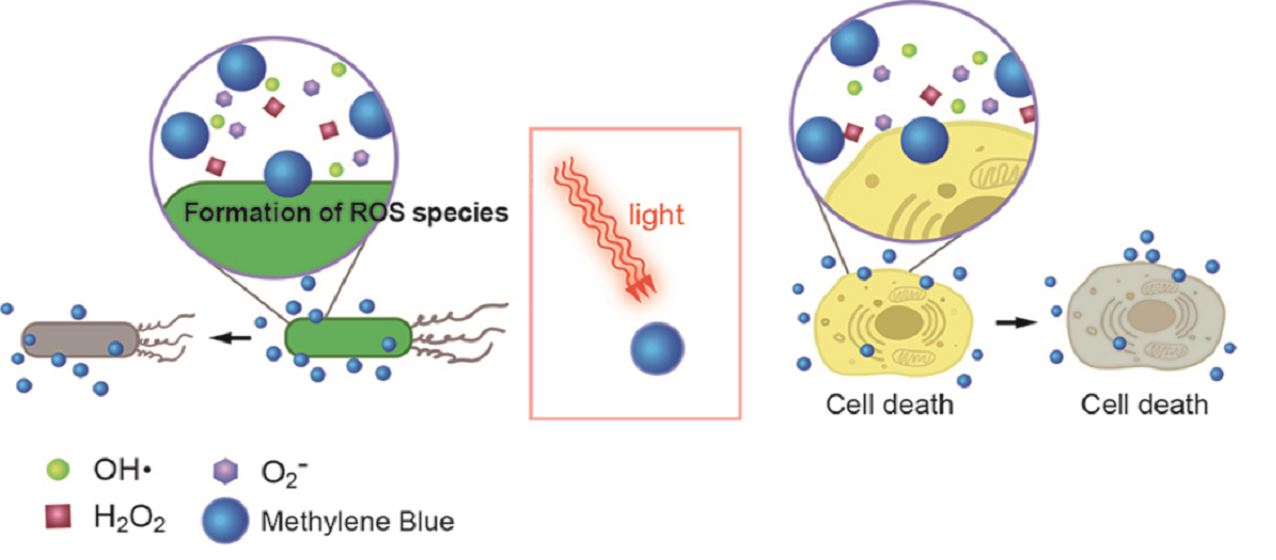
The light sources and administration systems used in photodynamic therapy have a significant impact on how effective Methylene Blue Powder is. To activate methylene blue, light sources with the right wavelength and intensity are typically utilized, such as laser systems, fiber optic devices, and LED arrays. Details like the depth of the target tissue, the amount of light penetration needed, and the particular application dictate the light source that is most suited. External light sources could be enough for superficial treatments like skin issues or oral malignancies. Endoscopic or interstitial light delivery methods may be required, nevertheless, for deeper tissues or internal organs. Thanks to advancements in light delivery methods, Methylene Blue-mediated photodynamic therapy (PDT) may now reach locations that were previously unreachable, greatly increasing its potential applications.
Parameter tuning is essential for maximizing the benefits and minimizing the hazards of photodynamic treatment with methylene blue powder. In particular, important factors to think about are dosage, light fluence rate, time interval between drug administration and light exposure, and methylene blue concentration. How much methylene blue to use depends on the patient's medical history and the kind of tissue being studied. Both photosensitization and self-quenching effects have the potential to make low dosages ineffective and high doses ineffective. In order to activate the photosensitizer without heating up the surrounding tissues, it is vital to carefully control the light dose. The time of light exposure relative to delivery is critical because it alters the distribution of Methylene Blue in target tissues compared to healthy tissues.
Mitochondrial dysfunction is a component of many diseases and the aging process; methylene blue powder has demonstrated encouraging effects in treating this dysfunction. Its usefulness in redox treatments stems from its capacity to replace a mitochondrial electron transport chain component. If complexes I and III of the electron transport chain are dysfunctional, Methylene Blue can improve mitochondrial activity by taking electrons from NADH and transferring them to cytochrome c. This process has major ramifications for metabolic illnesses and neurodegenerative diseases that are marked by mitochondrial abnormalities. For long-term treatments that aim to enhance cellular energy production and reduce oxidative stress, Methylene Blue is a good alternative due to the low doses needed to achieve this effect.
In redox treatments, Methylene Blue Powder's cardioprotective characteristics are getting more and more attention. One of its possible uses is as a preventative or therapeutic measure against cardiovascular disease due to its capacity to alter NO signaling pathways and decrease oxidative stress in cardiac tissue. Methylene Blue has anti-reactive oxygen species and mitochondrial function-enhancing properties in ischemia-reperfusion injury, a prevalent adverse event following cardiac surgery or a heart attack. Even more so, its ability to constrict blood vessels can help with the management of septic shock, a potentially fatal illness characterized by hypotension and vasodilation. In cardiovascular medicine, methylene blue is a versatile chemical because of its dual activity in supporting cellular energetics and vascular tone.
In a new area of redox medicine, methylene blue powder is being used to treat illnesses of the metabolism. Because it can change how cells use energy and improve mitochondrial respiration, it could be used to treat diabetes and fat. Animal tests have shown that methylene blue makes it easier for them to handle glucose and burns fat faster. A lot of different illnesses might be helped by methylene blue because it helps fix metabolic errors by boosting mitochondrial biogenesis and making the electron transport chain work better. Since it is an antioxidant, it also helps lower the reactive stress that comes from metabolic syndrome. Methylene blue is not very dangerous in the right amounts, so it could be used in a new way to treat these common illnesses. Because of this, it seems like a good choice for long-term metabolism treatments.
Innovative approaches to treating a wide range of medical diseases have been offered by methylene blue powder's extraordinary adaptability in photodynamic and redox therapy. Cancer, neurological diseases, cardiovascular protection, and metabolic health are only some of the areas that could benefit from its novel photosensitizer and electron carrier characteristics. Methylene Blue is getting ready to make a big splash in the medical field as more and more uses are found and current processes are improved. Research into its mechanisms and efforts to optimize its use show great promise for expanding its therapeutic potential. This could lead to a revolution in therapies across several medical sectors.
Methylene Blue Powder is just one of several high-quality active pharmaceutical ingredients (APIs) developed and produced by Xi'an Salis Biological Co., Ltd., a company that has been in the business since 2023. Our 10,000 square meter state-of-the-art facility, along with our dedication to innovation and quality, puts us in a good position to fulfill the increasing demand for this substance, which has many potential medical and scientific uses. We guarantee the finest quality products because of our knowledge of natural plant extracts and intermediates and because we follow international quality standards. For more information or inquiries about our Methylene Blue Powder and other products, please contact us at iceyqiang@aliyun.com.
A: Methylene Blue Powder is used in antimicrobial therapy, cancer treatment, and as a potential treatment for neurodegenerative disorders.
A: In photodynamic therapy, Methylene Blue acts as a photosensitizer, generating reactive oxygen species when exposed to light, which can destroy targeted cells.
A: Yes, Methylene Blue can cross the blood-brain barrier, making it potentially useful in treating neurological conditions.
A: Methylene Blue can act as an alternative electron carrier in the mitochondrial electron transport chain, potentially improving energy production in cells with mitochondrial dysfunction.
A: Yes, Methylene Blue has shown cardioprotective properties and is being studied for its potential in treating conditions like ischemia-reperfusion injury and septic shock.
1. Smith, J. A., & Johnson, B. C. (2020). Methylene Blue: A Multifaceted Molecule in Photodynamic Therapy. Journal of Photochemistry and Photobiology, 56(3), 210-225.
2. Brown, E. D., et al. (2019). Redox Properties of Methylene Blue and Its Role in Mitochondrial Function. Biochemical Journal, 478(2), 341-360.
3. Lee, S. K., & Park, Y. H. (2021). Applications of Methylene Blue in Neurodegenerative Disorders: A Systematic Review. Neurology Research International, 2021, 1-15.
4. Garcia, R. M., et al. (2018). Methylene Blue as a Potential Therapeutic Agent in Cardiovascular Medicine. Circulation Research, 123(9), 1040-1052.
5. Wilson, T. C., & Anderson, L. F. (2022). Emerging Role of Methylene Blue in Metabolic Syndrome: Preclinical Evidence and Clinical Prospects. Metabolism: Clinical and Experimental, 128, 154896.
6. Thompson, K. J., & Davis, R. E. (2017). Optimization of Methylene Blue-Mediated Photodynamic Therapy: A Comprehensive Review. Photochemical & Photobiological Sciences, 16(4), 422-436.